


In every industry, there are DIY methods, secret techniques, and popular trends that are touted by the community as the most effective ways to handle common problems. Unfortunately, while some tips and tricks can be very valuable, others can actually be ineffective, harmful, or even dangerous.
The same is true in the RV industry. Well-meaning campers often spread their opinions to others, causing outdated or incorrect information to mislead RVers about how to deal with everything from using RV wastewater valves to the best RV holding tank cleaning methods.
That’s where we come in. In this article, we’re going to review the top 10 most common RV holding tank myths, and let our experts (with over 30 years of experience solving wastewater issues) provide real, safe, and accurate information that you can trust.
Key Points About Common RV Holding Tank Myths
- RV wastewater holding tanks are not the same as septic tanks because they only hold waste for a few days to a week before being dumped, meaning that they need to be cared for differently.
- RV black water holding tanks shouldn’t be neglected, and need to be treated with high-quality, bacteria- and enzyme-based treatments to prevent clogs, foul odors, and misreading sensors.
- RV holding tanks should never be treated with The Geo Method (Pine-Sol, Calgon, and Water), Borax, Bleach, or the Ice & Driving technique, because none of these methods are effective, they can be detrimental to waste breakdown, and can even damage your RV holding tanks and components.
- Learn to treat your RV holding tanks safely and effectively with The Unique Method, a set of easy-to-follow guidelines developed by RV experts to help you avoid 99% of RV wastewater issues before they even occur.
RV Myths: Facts vs. Fiction
Myths are extremely pervasive in society because they often provide simple methods for complex tasks, stem from the wisdom of those “more experienced”, and offer support from a community of like-minded individuals.
Unfortunately, while myths are usually interesting and easily remembered, the nature of myths is that they are also retold, adapted, and even exaggerated. It’s true that perhaps one, or a few, individuals may have had success using a certain technique in a specific scenario, but it doesn’t mean that it is a proven, or safe, method for success. In some cases, it may even be dumb luck.
So what does this mean for caring for your RV holding tanks? It simply means that you should:
- Always trust RV facts over myths.
- Rely on RV wastewater experts for advice.
- Research the RV information you receive to verify that it is legitimate and safe.
- Avoid believing every RV tall tale you hear by the campfire (or via YouTube short).
Debunking the Top 10 RV Holding Tank Myths
Now let’s take a closer look at some of the top RV holding tank myths, and help provide the facts you need to care for your holding tanks worry-free.
Myth #1: It’s Safe to Leave the RV Black Water Holding Tank Valve Open
This is absolutely a myth, and one that can cause serious issues in your RV black water holding tank.
FACT: You should always keep your RV black tank valve closed unless you’re actively dumping.
Keeping your RV black water tank valve closed prevents clogs and pyramid plugs, supports proper waste breakdown, and reduces black tank odors.
When you leave your black water tank valve open, liquid inside your holding tank drains out as expected, but toilet paper and waste are often left behind. Over time, this solid waste builds up on top of itself and can cause a pyramid plug. Poop pyramids can grow so large that they eventually prevent anything, even liquid, from entering the tank.
Learn more about why it’s important to keep your RV black water tank valve closed: Why You Should Keep Your RV Black Water Valve Closed
Myth #2: RV Wastewater Systems Are The Same As Septic Systems
RV wastewater systems are not the same as septic systems, and need to be treated differently.
FACT: The biggest difference between an RV black water holding tank and a septic tank is the length of time that wastewater is stored inside.
RV black water holding tanks hold waste from anywhere from a few days to a week before being dumped, while septic tanks hold waste for weeks or even months before being discharged.
RV holding tank treatments are important because the waste in an RV holding tank doesn’t have as much time to break down, and bacteria- and enzyme-based treatments can help prevent clogs and foul odors, and ensure that waste is nearly liquefied whenever you’re ready to dump.
Myth #3: You Don’t Need to Treat Your RV Holding Tanks With Anything
As we’ve discovered, RV holding tanks are different from other wastewater treatment options like septic systems, because they only hold waste for short periods of time.
This means that the natural bacteria present don’t have enough time to completely liquefy the waste before it will be flushed from the tank.
When you neglect your RV holding tanks, you are likely to experience clogs, foul odors, and misreading sensors in the following ways:
- RV Clogs: When human waste and debris isn’t fully broken down, it can cause clogs in the holding tank discharge pipe during the dumping process, or can slowly build up inside the tank over time and harden, causing pyramid plugs and compacted tanks.
- RV Foul Odors: As waste builds up, odor-causing bacteria can rise from your holding tanks and enter the living space of your RV.
- RV Misreading Sensors: Human waste, grease, and other debris can stick in crevices or cling to the walls of the RV holding tank, blocking sensors and causing them to misread.
FACT: If you follow The Unique Method, and use a high-quality bacteria- and enzyme-based holding tank treatment, you can significantly improve waste breakdown, reduce clogs and odors, and help prevent misreading sensors.
Myth #4: The Geo Method is Effective for Treating RV Holding Tanks
The Geo Method is a viral, DIY technique that claims to be effective at treating RV black tanks, but through testing and experience with real RVers, this method simply doesn’t deliver.
The Geo Method is a relatively expensive combination of Pine-Sol, Calgon, and water.
Some professional tank cleaners recommend this process because they claim that Pine-Sol stops the breakdown of poop, and they erroneously insist that poop should remain solid inside your RV holding tank for best results.
However, our testing has shown that the combination of water and Pine-Sol still allows poop to break down, thereby defeating the entire basis of using this potentially tank-damaging, problem-causing household cleaner in your RV toilet.
Additionally, our testing has revealed that Pine-Sol is completely ineffective for eliminating RV toilet odors. At most it seems to cover foul smells with a potent (some may say overwhelming) scent of chemically-smelling pine fragrance.
FACT: Aside from being ineffective, The Geo Method is potentially detrimental to your RV.
We contacted Pine-Sol, and their representatives have shared that the product can damage rubber RV toilet and tank seals, which may lead to messy and expensive tank repairs. In fact, Pine-Sol representatives directly noted that they do not recommend using the product in black tanks because it may cause problems.
While damage to your RV is possible, The Geo Method may also cause damage to campground septic and water systems, particularly because it is not recommended to pour excessive amounts of antibacterial products down drains.
For more details on the merits and pitfalls of this technique, refer to our guide: The Geo Method for RV Holding Tanks: Does it Really Work?
Myth #5: Borax Can Be Used to Clean RV Holding Tanks
Sodium Tetraborate (Borax) is a mineral that has been used as a cleaning product for years. It can get rid of stains and mold, kill bugs, neutralize odors, soften hard water, and is used in detergents and other cleaning products.
It is considered a chelating agent, which is a chemical structure that bonds with metal ions, making them soluble; basically small amounts of metal can be carried away by water. Borax has some cleaning power and can soften water, which is a similar chemical combination to the Geo Method but in one product.
The myth is that water softening products like Borax can make RV holding tank walls slick, preventing waste and debris from sticking, and allowing it to slide off easily. However, there’s no evidence that residue already stuck to the walls will be loosened, or that walls will be coated when introduced to RV holding tanks.
FACT: Our tests and analysis cannot confirm that Borax will deliver the desired results in RV holding tanks, and using it actually hinders waste breakdown by killing necessary bacteria.
Even combining Borax with Dawn Ultra dish soap will not enhance the cleaning power.
Myth #6: The Ice & Driving Technique Works to Clean RV Holding Tanks
The ice and driving technique has been circulating for over a decade. The basic concept is that you combine ice, water, and dish soap in your RV holding tanks and then drive around for a few hours to let the mixture slosh around in the tank.
The ice is meant to be a scouring agent for the walls of the tank and the detergent offers additional cleaning assistance. Proponents of this technique say you have to be very specific about how much ice and water you use; too much water and the ice will simply float around and not provide scouring power, and not enough water will cause the ice to freeze into a mass.
This option sounds enticing, but this method isn’t effective because:
- Ice is not abrasive enough to remove stubborn debris from RV holding tanks. .
- Ice can often melt too quickly, or freeze and cause damage to internal RV components.
- In order for the ice to scour the top of the holding tank, RVers may need to practice unsafe driving habits including driving erratically, cornering sharply, or hitting bumps hard which can damage the RV’s suspension.
FACT: From our experience with customers who have tried the ice and driving technique, they report it is pointless, unsuccessful, and a waste of time and money.
Myth #7: Bleach & Other Harsh Chemicals Are Safe for RV Holding Tanks
People often ask if we recommend using bleach to clean out their wastewater holding tanks. That’s a triple no.
FACT: Bleach is bad for RV holding tanks because it can corrode plastics, degrade rubber seals, and kill beneficial bacteria needed to break down waste.
However, bleach does a great job sanitizing your freshwater tank when properly diluted, and then thoroughly rinsed, to ensure that your tap water is clean and free from bacteria.
Learn why it’s important to treat your RV holding tanks without bleach and harsh chemicals: Why are Bacteria and Enzymes Good for Your RV Holding Tanks?
Myth #8: You Can Conserve Water Usage in Your RV Holding Tanks to Extend the Time Between Dumps
The myth is that by limiting water usage in your RV means that you don’t need to dump your holding tanks as often. While this sounds like a legitimate suggestion, it’s one of the worst things you can do while camping.
FACT: Most problems that arise in RV holding tanks like foul odors, clogs, and misreading sensors are caused by not having enough water inside your black water holding tanks.
Water is one of the most important things you can add to black water holding tanks because it acts as a natural odor barrier, and is crucial for preventing clogs.
Two places where you should always use plenty of water in your RV:
- Toilet Bowl: Keep a small amount of water in your toilet bowl at all times (unless driving) to prevent tank odors from escaping into your RV living space.
- Black Tank: Always hold down your flush pedal for 10 seconds every time you use your toilet. Not only does this provide a vapor barrier, but it also prevents pyramid plugs and compacted tanks by softening the waste and preventing it from clinging to the walls and floor of the tank.
Find our more about why water usage is so important in your RV: Why Using Lots of Water in Your RV Toilet and Tanks is Crucial
Myth #9: You Have to Use Special RV Toilet Paper in RV Holding Tanks
RV-safe toilet paper is more expensive, rougher, and lower in quality, while many regular brands dissolve just as well, cost less, and are more comfortable.
FACT: You don’t need to overspend on RV-specific toilet paper.
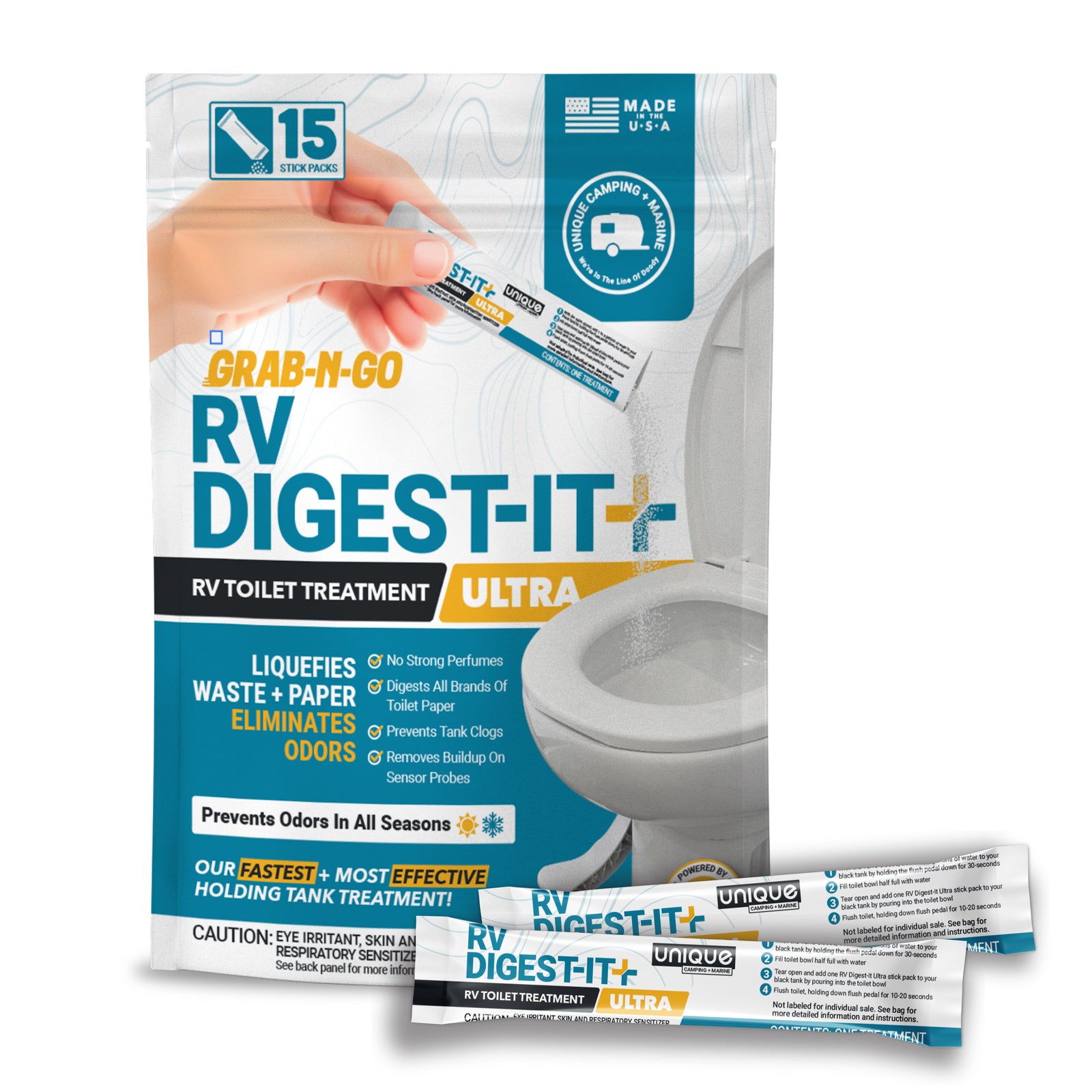
If you are using a high-quality, bacteria- and enzyme-based RV holding tank treatment (like Unique RV Digest-It Ultra), the superior formulation aids in breaking down waste and toilet paper, and is crucial for optimal tank performance.
Learn more: Is RV Toilet Paper Necessary?
Myth #10: All RV Tank Treatments Are Safe & Equally Effective
Some campers still believe one of two things, either that there is no product that you can add to your RV holding tanks to help improve its performance, or that all RV holding tank treatments generally do the same thing.
FACT: Not all RV holding tank treatments are created equal, and while RV black tank treatments might seem simple or straightforward, the unfortunate truth is that many tank treatments on the market simply don’t work, and can even be harmful.
RV black tank treatments should do the following:
- Digest and breakdown human waste
- Digest and breakdown all brands of toilet paper
- Eliminate odors at the source
- Prevent waste buildup on sensor probes
If your holding tank treatment can’t accomplish all of these critical things, you can expect to experience clogs, backups, foul odors, or misreading sensors in your RV.
Current RV Tank Treatment Rankings: Best RV Black Tank Treatments – Reviewed By RV Techs
Myths Busted: The Truth About RV Holding Tank Maintenance
It’s always nice to get helpful advice from someone who has been RVing longer than you, but beware — even the most experienced camper can unintentionally give you advice that can cost you time and money on tricks (The Geo Method, Borax, Bleach, Ice & Driving) that simply don’t deliver results.
That’s why we developed The Unique Method, an easy process that can help you camp without toilet clogs, unpleasant odors, or misreading sensors. But, we also have to be clear, no RV tank treatment on its own is a magic bullet. The Unique Method incorporates a 50/50 technique, which is 50% about using the products, and 50% about using the right process. This comprehensive approach includes safe and effective products combined with processes that help you build strong daily RV habits.
When you start incorporating The Unique Method, you can solve 99% of your RV wastewater issues before they even occur. But, if you find yourself struggling with your RV holding tanks, don’t face those issues alone – reach out to our expert Customer Service Team for help today.


Prevent Common Problems In Your Tanks!
From misreading sensors, preventing clogs, or eliminating odors, we've got you covered no matter how you camp! All our best holding tank tips and trick information plus more can be found conveniently in one place when you download our FREE Unique Method Field Guide PDF. Achieve holding tank bliss today!
Get The Free Download Get The Free Download