



I love RVing in the Summer because of the hot, sunny days, cool, breezy nights, flexible travel itineraries, water-based activities, and exploration — all while enjoying longer days.
So what’s the problem? Well, high temperatures can lead to uncomfortable RV conditions, particularly bad odors. There are so many ways to cool off when it’s hot, but foul odors feel nearly impossible to escape.
And it’s true…if you aren’t willing to modify certain camping habits, you WILL be stuck dealing with foul odors. It’s not subjective, it’s science.
However, if you make a few small changes to your daily RV practices, I’m here to tell you that you can enjoy odor-free camping all season long.
Why Does High Heat Cause RV Odors to Increase?
If you’ve ever thought that bad smells were more intense in high heat…you’re right!
A few scientific principles explain why hot temperatures make foul odors more intense, including:
-
Liquid Evaporation: As temperatures rise inside your black tank, water evaporates, causing waste and toilet paper to breach the water line, and allow odors to waft into the RV living space.
-
Increased Volatility: High temperatures accelerate the phase change of liquids or solids into gas, causing human waste and debris to emit more aroma-causing compounds.
-
Faster Diffusion: Heat increases the kinetic energy of odor particles, causing them to move faster and spread throughout the air more quickly.
-
Accelerated Bacteria Growth: Stinky bacteria (bad) thrive in hot, moist conditions, and when holding tank temperatures rise, their growth accelerates and causes odors to become uncontrollable.
How Do You Check Holding Tank Temperatures?
Thankfully, it’s pretty easy to determine the temperatures of your holding tanks, and it doesn’t involve any expensive or specialized equipment.
Through extensive testing, we’ve found the following:
-
When parked on concrete or asphalt, tank temperatures nearly match the outside ambient temperature.
-
When parked on grass or dirt, tank temperatures are approximately 10°F cooler than the outside ambient temperature.
Odors become more intense and problematic when temperatures exceed 85°F — so, if it’s 95°F outside, that means odors are probably more intense inside your holding tanks, and you need to take action to cool them down.
How to Control RV Odors in High Heat: 3 Easy Steps
1. Use More Water
Water is the single best thing you can use to reduce odors in holding tanks.
Using more water in your holding tanks does the following:
-
Allows good bacteria to live, thrive, and break down waste effectively.
-
Keeps tanks cooler by consistently adding fresh water.
-
Maintains an odor barrier by keeping waste and debris submerged.
You can easily use more water in your RV by:
-
Keeping several inches of water in your toilet bowl (while parked): Provides an odor barrier, preventing holding tank odors from wafting into your living space.
-
Using ample amounts of water when using the toilet: Hold down the flush pedal for 10 seconds every time you use your toilet.
2. Dump Tanks More Often
No one likes to dump their tanks, but keeping a regular dumping schedule when you’re in high heat is important for odor control.
For best results, dump your black tank every 3-5 days.
After every dump, thoroughly rinse your black tank. The most effective method is to fill your black tank with fresh, clean water, and then dump your tank. Do this twice.
|
Caution to High-Heat Boondockers: This style of camping is legitimate, but if you camp in hot temperatures with extremely low water usage and extended periods between dumps…you’ll have to learn to live with odors. Extreme conditions push tanks beyond the scientific limits for odor control. |
3. Add Bacteria- and Enzyme-Based Treatments
If you know you’re going to be camping in high temperatures, try activating your black tank ahead of time.
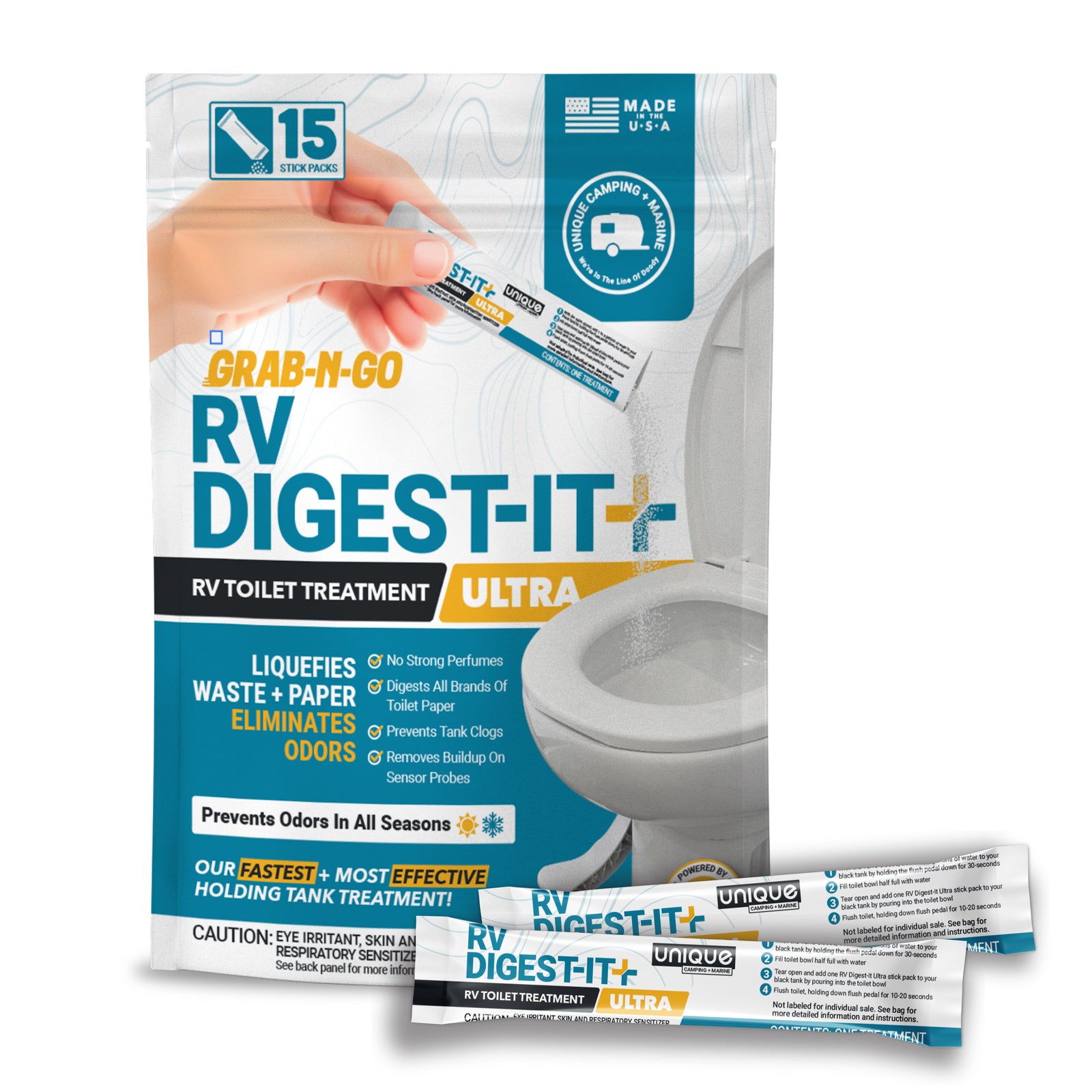
Start by adding 2-4 gallons of water and a high-quality bacteria + enzyme tank treatment to your black tank (I recommend RV Digest-It Ultra) before you use the toilet.
This boosts the amount of good bacteria and enzymes in your tanks to eliminate odors at the source, and preemptively establishes an odor-blocking water barrier.
Watch: How to Eliminate Black Tank Odors at the Source
Pet-Friendly Camping Advice: 9 Traveling Tips
For many of us, our furry companions are more than just pets — they’re family. RVing is great because pets can enjoy the journey as much as you can (unlike flying, for example).
However, for everyone’s safety and enjoyment, there are a few things to keep in mind when camping with pets:
1. Legality
Start by checking state laws about leaving pets in RVs unattended. Then, on days when you need to leave your pet, consider pet monitoring software or apps that utilize thermometers and cameras to notify you if temperatures are too hot/cold, or if your pet is panicking/barking.
2. Safety
While driving, make sure to use dog seats, harnesses, or traveling crates/carriers that are adequately secured. If you have a fifth wheel or travel trailer, similar to humans, it’s not safe for pets to ride in trailers while towing.
3. Temperature Control
While parked, experienced vets strongly recommend that you ensure the interior of the RV stays cool while you’re out and about, and to avoid letting pets overheat if left outside in fenced areas of campgrounds.
4. Etiquette
Most campgrounds require pets to be fully vaccinated and leashed whenever they’re outside of your RV. No matter how well-behaved your dog may be, keep everyone safe by keeping them leashed outside of designated zones.
5. Familiarity
Pack items that are familiar to your pet: bed, blanket, toys, water and food bowls, leash, medications, waste bags, and pet first-aid kit. These items can give anxious pets some comforts of home.
6. Identification
Identification tags or microchips are must-haves while traveling with pets. You never know when a pet can escape, chase after an animal, or get lost. I also recommend keeping a digitized version of your pet’s veterinary records that are accessible offline in case of emergency.
7. Exercise
Pets need to stretch and play, too, so make sure to take them out for fresh air during stops along your route. Ensure they get the same, or more, exercise that they get at home, and plan pet activities for both better behavior during the day and sleep at night.
8. Acclimation
If your pet is new to traveling, start by spending the night in the RV while you’re still at home, or with a few shorter trips to help them adjust to RV life before tackling longer adventures.
9. Planning
Map your route to campgrounds and RV parks that are pet-friendly, and look for sites that offer dog baths, check-in treats, off-leash dog parks, dog-friendly trails, and other spaces where your pet can enjoy the vacation, too!
Have Questions About Your RV?
Contact the friendly and professional Customer Support Team at Unique Camping & Marine for answers today.
About This Blog
My name is Annie, and I’ll be coming to you each month with expert tips and information that benefit all types of RVers. Each piece is written, not by Artificial Intelligence, but by an Actual Individual... me!
I research each subject, consult industry professionals, and verify information with certified RV techs before this article ever gets published.
If there’s a topic you’d like me to cover, feel free to email me.
- Annie