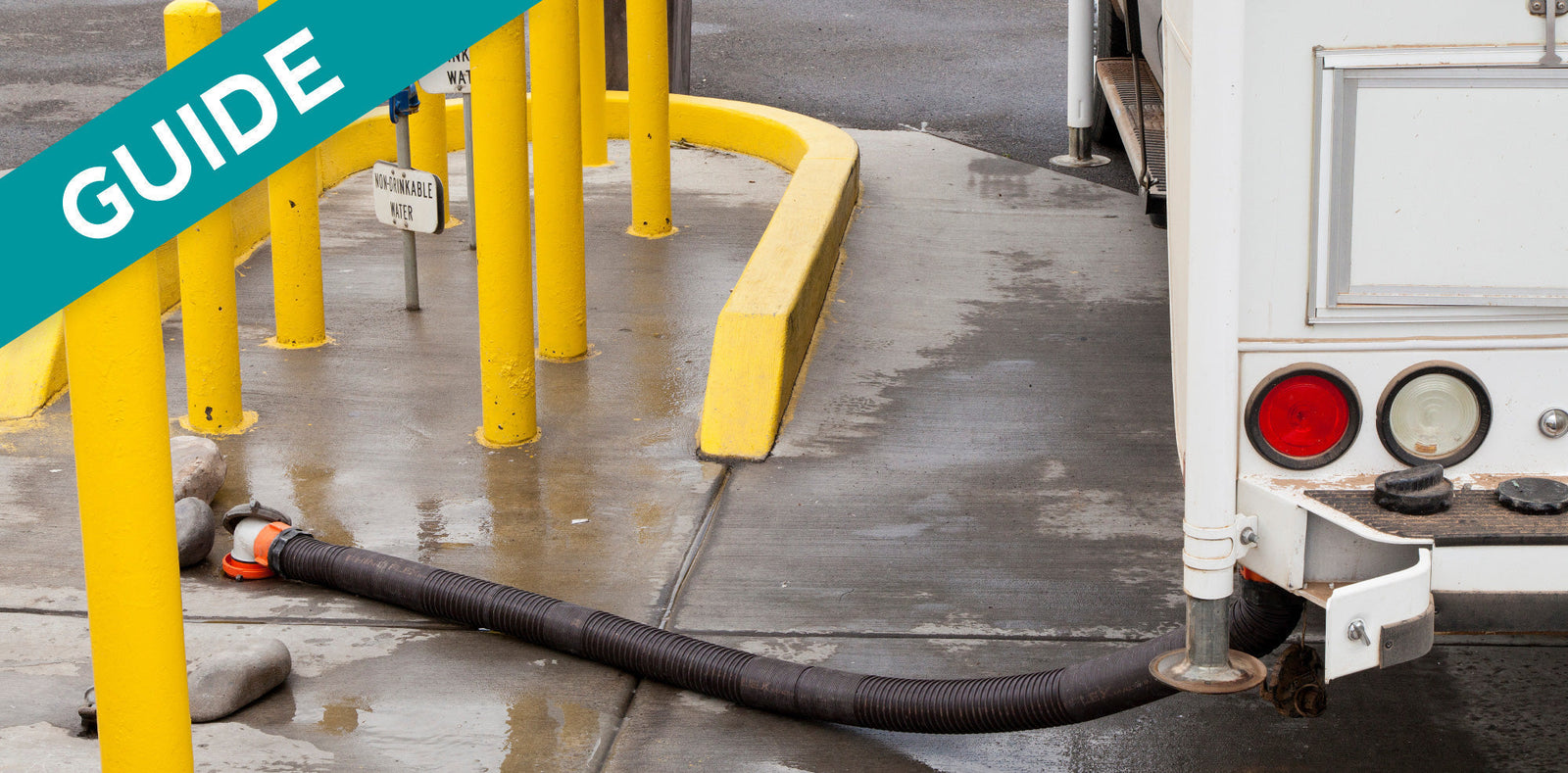




Your RV holding tanks do a lot of heavy lifting while you’re out on the road, storing everything from waste and toilet paper to grease and residue until you make it to the next dump station. Over time, the inside of your holding tanks can build up with lingering waste and debris, causing you to experience clogs, foul odors, and misreading sensors in your camper.
The good news is: it doesn’t have to be this way. Developing regular holding tank rinsing habits is an integral part of keeping your holding tanks and sensors working properly.
In this article, we’ll cover why it’s important to consistently rinse your holding tanks, the best (and really only) way to rinse your holding tanks effectively, and how following The Unique Method can help prevent 99% of RV wastewater issues before they even occur.
Key Points About Rinsing RV Holding Tanks
- RV holding tanks should be rinsed after every dump to help flush out any remaining waste, toilet paper, debris, grease, soap scum, shampoo, or residue from your holding tanks to prevent buildup.
- The best way to rinse your holding tanks is to fill them completely with water, and then dump the contents. Repeat this 1-2 times to thoroughly rinse your holding tanks.
- Misreading sensors are often caused when the accumulation of removable debris like human waste, toilet paper, grease, or food particles cover the sensor and complete the circuit, falsely indicating that the water inside the tank has reached that level.
- Establishing good maintenance habits for your RV holding tanks, as outlined by The Unique Method, a proven, science-backed, and easy-to-follow approach, helps you avoid clogs, foul odors, and misreading sensors while out on the road.
Why Do You Need to Rinse RV Holding Tanks?
Rinsing your RV’s holding tanks is important because dumping naturally leaves debris behind, and an easy way to illustrate this phenomenon is by comparing your holding tanks to your kitchen sink.
After washing dishes, if you look at the walls, curves, and around the drain of your sink, you’ll often find food particles, soap, and other debris that didn’t drain right away. As a result, rinsing your sink is the ideal way to flush everything remaining down the drain.
The same is true for your RV holding tanks. When you dump your RV holding tanks, some waste and debris will be left behind, which can eventually dry onto the tanks interior walls, ledges, crevices, and holding tank sensors.
If you dump your tanks multiple times without rinsing, layers of residue can accumulate on the tank walls and sensors, which can cause:
- Clogs: Toilet paper, waste, and debris that is repeatedly dried and softened can begin to build up along the bottom of the tank resulting in compacted holding tank clogs.
- Foul Odors: Waste that is allowed to linger in crevices and on tank ledges can produce unpleasant odors.
- Misreading Sensors: Debris and residue cover the sensors causing them to misread.
The Best Way to Rinse RV Holding Tanks
Most RV problems that arise like foul odors, clogs, and misreading sensors are caused by not having enough water inside your black water holding tanks.
Water is the best thing you can add to RV holding tanks. The same is true when it comes to rinsing your holding tanks.
Learn More: Why Using Lots of Water in Your RV Toilet and Black Tank is Crucial
How to Rinse Black Tanks
Rinsing and deep cleaning your black water tank is important because after you dump your tank, waste and debris can often linger in crevices, tank ledges, sensor probes, and low points. As the remaining waste accumulates, it can lead to foul odors, clogs, and misreading sensors.
The most effective way to rinse your black tank is to fill it completely with clean water, and then dump the contents. Repeat this 1-2 times to thoroughly rinse your black tank.
How to Fill Your Black Tank for Rinsing
When you go to fill your black tank, you can fill it a few different ways.
- Toilet Flush Pedal (Easiest): Hold the toilet flush pedal down, and watch the water fill
the tank through the pipe that connects the toilet to the black tank. Even if you have 45-degree fittings,
water will back up into the pipe when it’s full.
- Pro Tip: Opt to use a toilet flush valve prop to fill the tank without holding the flush pedal.
- Hose: Connect a hose to the black tank rinser and run water until it is full. We recommend using a flow meter to monitor the amount of water you’re adding to the black tank.
- Back Flow Device: If you use a backflusher, once again, make sure to use a flow meter to monitor the amount of water added to the tank.
- Tank Cleaning Wand: Using a toilet flush
valve prop, you can use a rinse wand without damaging the ball valve gasket.
- Straight Pipe: If the pipe connecting your toilet to the black tank is straight, we recommend this straight toilet wand.
- 45-Degree Fittings: If you have 45-degree fittings connecting your toilet to the black tank, we recommend this flexible toilet wand.
Video: How to Rinse an RV Black Water Holding Tank
How to Rinse Gray Tanks
Rinsing and deep cleaning your gray water tanks regularly prevents the buildup of grease, scum, soap, and residue, which are the main causes of unpleasant odors and misreading sensors.
Grease deposits come from food, but also come from soaps, shampoos, conditioners, lotions, body oils, and other items that make their way into your gray and galley tanks. Even campers that meticulously scrape waste from dishes, or only use paper plates, can still face an accumulation of grease in their gray water holding tanks.
The most effective way to rinse your gray tank is to fill it completely with clean water, and then dump the contents. Repeat this 1-2 times to thoroughly rinse your gray tank.
How to Fill Your Gray Tank for Rinsing
The best way to fill your gray tank is by running a fixture in your RV. It doesn’t matter whether you run the kitchen sink, bathroom sink, or shower, because all will help fill the gray water holding tank.
Similar to black tanks, we recommend using a flow meter in line with the hose connected to the city water connection. This allows you to monitor the amount of water flowing into the RV and down the drain into your gray water tank.
It is possible to run all of the fixtures at once to fill the tank, however, the total flow rate is limited by the water supply. As a result, running multiple fixtures at once does not effectively speed up the process of filling the gray tank.
How Often Should You Rinse RV Holding Tanks?
As a best practice, we recommend rinsing your holding tanks after every dump.
This keeps your holding tanks free from debris, and prevents any waste or residue from drying, hardening, and building up on the inside of your tanks.
Why is This Rinsing Method So Effective?
This simple method is far more effective for thoroughly rinsing a tank than using internally mounted tank rinsers, tank wands, or external tank flushes. But why?
Extensive Testing
Our extensive testing of these external devices has proven that they are highly ineffective for the majority of RV wastewater systems. The only way to be sure you’ve drained all the remaining waste out is to routinely fill and dump your tanks.
Recommended Tank-Dumping Habits
The other important distinction with this method is filling your tanks completely.
If you’re following RV holding tank best practices, then you’re typically dumping your tanks whenever they are two-thirds (⅔) full. This is an excellent practice, however, it does mean that any waste or debris that is sloshed toward the top of your holding tanks never gets rinsed out properly.
By filling your RV holding tanks completely, you’re ensuring that the entire interior of your holding tanks are thoroughly rinsed.
Misreading Sensors & Rinsing RV Holding Tanks
The most common reason that RV holding tank sensors stop working is when removable debris like human waste, toilet paper, grease, or food particles cover the sensor, hanging off of it into the liquid below.
When this occurs, the debris can complete the circuit, causing the sensor to falsely indicate that the water inside the holding tank has reached that level. If debris is the problem you’re dealing with, the problem can be fixed by cleaning the debris off of the sensors, allowing them to read accurately again.
If you’re not sure whether your RV sensors are dirty or broken, learn how to accurately diagnose the problem: Why Are My RV Sensors Not Working? How Do I Fix Them?
How to Clean RV Black Tank Sensors
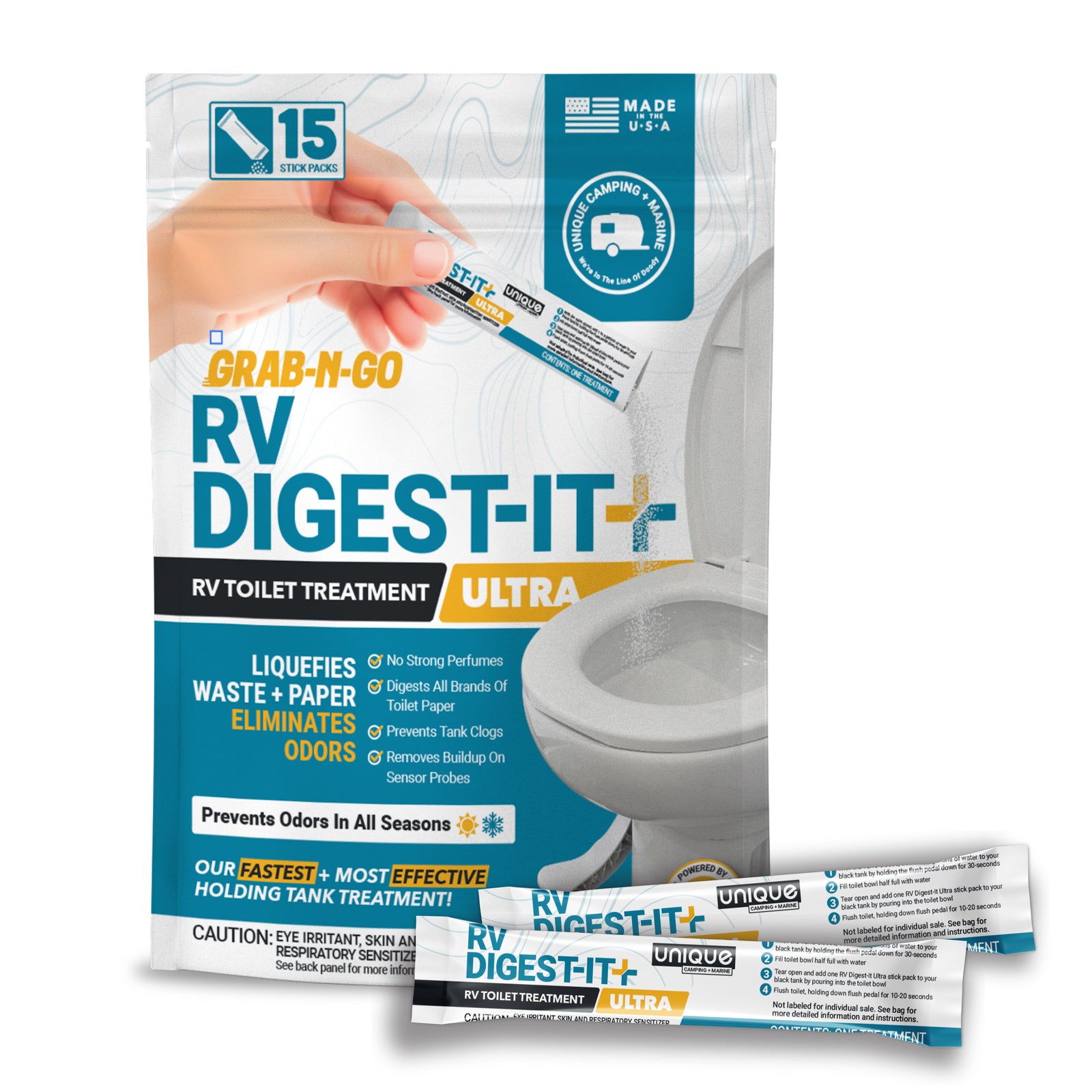
For black tank sensors, we recommend using Unique Restore-It, a product that utilizes bacteria and enzymes to clean and restore your sensors, ensuring accurate readings and a worry-free RV experience.
For complete instructions, refer to our guide: Steps for Cleaning Black Tank Sensors
How to Clean RV Black Tank Sensors
For gray tank sensors, we recommend using Dawn Ultra dish soap because it is the best grease-eating dish soap on the market.
For complete instructions, refer to our guide: Steps for Cleaning Gray Tank Sensors
The Unique Method: Your Guide to Proper RV Holding Tank Maintenance
Over 30 years of solving wastewater problems professionally, the team at Unique Camping + Marine developed The Unique Method — a simple set of rules that can allow you to avoid 99% of wastewater issues before they occur.
The Unique Method addresses the three most important factors in RV wastewater management:
- Effective odor elimination
- Efficient solid waste breakdown
- Effortless sensor cleaning
While there is no magic solution that ensures completely worry-free camping, those who follow The Unique Method, using both the right process and the right products, can experience the best that RVing has to offer.
Fill It, Dump It, Repeat: The Only Way to Rinse RV Holding Tanks
The best way to thoroughly rinse your RV holding tanks is surprisingly simple. Simply fill your tanks completely full with water, dump, and repeat. This creates the volume and flow needed to carry away more waste and residue than a quick rinse ever could.
Do this twice after every dump, and your holding tanks will be cleaner than with any rinsing wands, backflushers, or viral online techniques.
With the right combination of water and the proven maintenance techniques outlined in The Unique Method, you can spend less time dealing with tank maintenance and more time enjoying the road.